
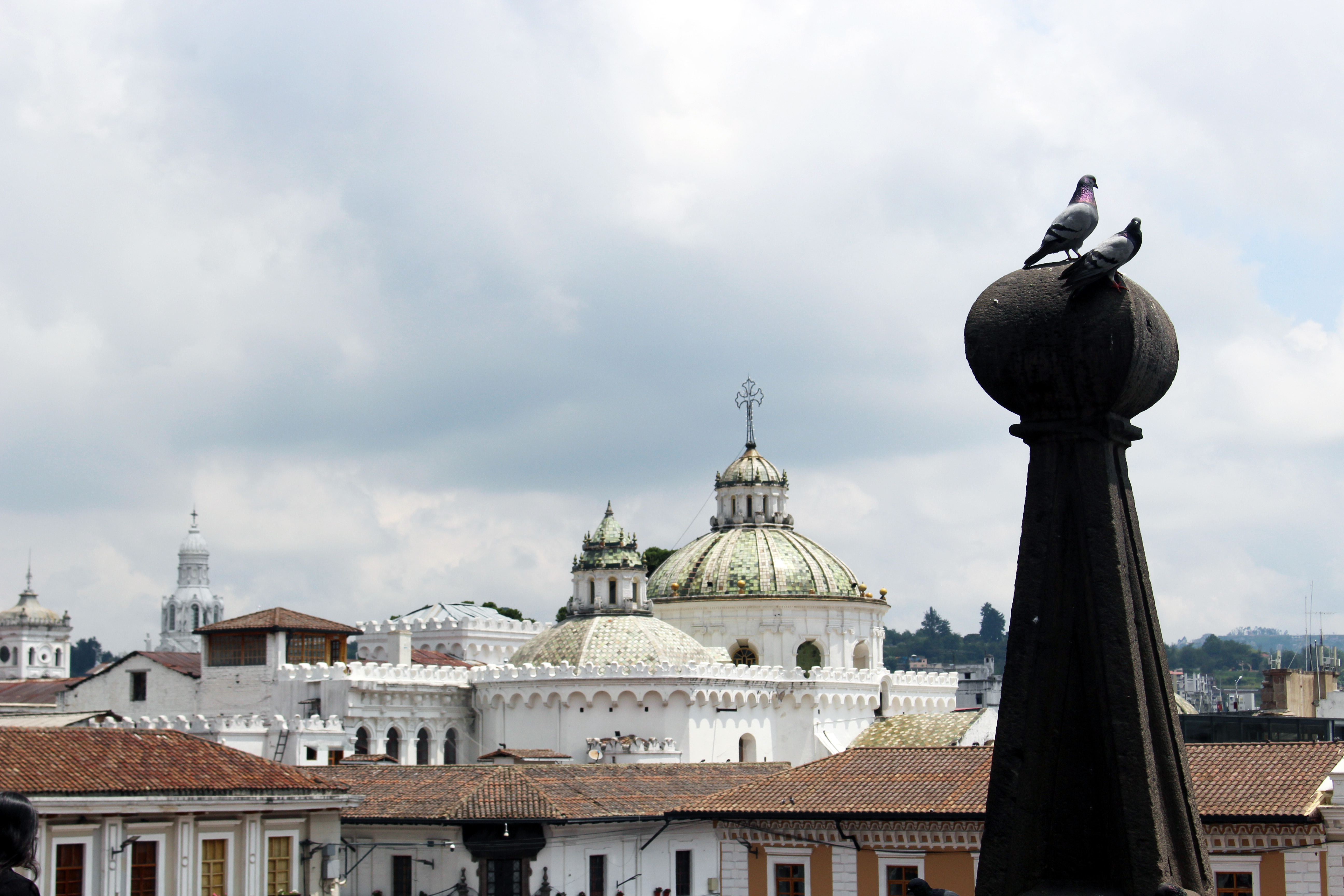
In the heart of Quito’s historic center rises the Church and Convent of San Francisco, one of the most impressive architectural complexes in Latin America. Founded in 1535, it is considered the first church built in the city and a symbol of colonial and Franciscan heritage. Its monumentality and artistic richness have made it an essential place for those who wish to understand the history and culture of Ecuador.

Historical and architectural heritage
Diverse styles: combines Baroque, Mudejar, and Mannerist elements, reflecting the cultural fusion of the colonial era.
Monumental complex: includes the main temple, side chapels, and a convent that occupies almost two blocks of the historic center.

Art and Legends
Artistic richness: houses sculptures, altarpieces, and paintings from the Quito School, one of the most important in the Americas.
The legend of Cantuña: a popular tale that tells how an Indigenous man supposedly made a pact with the devil to finish the construction, a story that continues to fascinate locals and visitors.
Museum and cultural spaces: in addition to being a place of worship, it functions as a museum that preserves historical and artistic pieces.

Reasons to visit the Church and Plaza of San Francisco
Reasons to visit the Church and Plaza of San Francisco
It is a living testimony of Quito’s colonial history.
It allows visitors to appreciate the artistic mastery of the Quito School.
It offers a unique cultural experience, where religion, art, and legend come together.
It is located in Plaza San Francisco, one of the city’s most emblematic spaces.

Visiting the Church of San Francisco means stepping into Quito’s history and discovering how architecture, art, and legends intertwine to bring life to one of the most important monuments in Latin America. It is a place that not only impresses with its beauty but also invites reflection on Ecuador’s past and cultural identity.


