
If you’re wondering whether the Galápagos Islands, should be on your travel bucket list, the answer is a resounding yes — and this post will show you exactly why. Located about 600 miles off the coast of Ecuador, this remote volcanic archipelago is one of the most extraordinary destinations on Earth. It is a place where travelers can witness evolution in action, immerse themselves in pristine marine environments, and return home with a deeper appreciation for conservation.
Whether you’re considering a Galápagos cruise, a land-based tour, or simply planning ahead for 2026, here are the top 10 reasons to visit the Galápagos Islands in 2026.

1. It’s the Birthplace of Darwin’s Theory of Evolution
Few destinations on Earth carry the scientific weight of the Galápagos. It was here, during his 1835 voyage aboard the HMS Beagle, that Charles Darwin observed the variation in species across the islands — observations that would eventually become On the Origin of Species. Walking the same lava trails Darwin once explored, and seeing the living proof of natural selection with your own eyes, is a humbling and genuinely mind-expanding experience. The Galápagos Islands are a place where history has been made, and it’s one of the few places on Earth where wildlife shows no fear of humans, meaning you can observe it from just a few meters away.
Where to feel it most: The Charles Darwin Research Station on Santa Cruz Island, and the highland giant tortoise reserves where evolution is visible in real time.

2. The Galápagos Wildlife Is Unlike Anything Else on the Planet
This is the single most compelling reason to visit. Inquisitive sea lions and spiky marine iguanas breach and bask between island and shore. Hammerhead sharks patrol the deep waters while blue-footed boobies and albatross cut through the sky. The key difference from every other wildlife destination? None of it retreats when you approach. Giant tortoises continue grazing. Blue-footed boobies perform their courtship dances three feet in front of you. Sea lions sleep on the benches at the dock.
The Galápagos are home to more than 9,000 species, over 1,500 of them found nowhere else on Earth. It is, without question, one of the greatest wildlife destinations in the world.

3. You Can Snorkel and Dive With Extraordinary Marine Life
The underwater world of the Galápagos is as spectacular as what you see on land. Snorkeling in the Galápagos is accessible even to beginners and rewards travelers with close encounters with sea turtles, rays, reef fish, and playful sea lions that seem to treat humans as toys rather than intruders.
For certified divers, the Galápagos ranks among the world’s premier dive destinations — especially at the remote northern islands of Darwin and Wolf, where hammerhead sharks, whale sharks, and other large pelagics gather in extraordinary numbers. Snorkeling in the Galápagos is genuinely one of the most immersive wildlife experiences available to travelers anywhere.
4. Every Island Is a Different World
With more than 19 larger islands and dozens of smaller islets, the Galápagos archipelago offers staggering diversity across a relatively compact area. Santa Cruz is the main visitor hub with a good selection of hotels, two volcanic craters, and a giant lava tunnel. On Isabela Island you can hike up an active volcano, snorkel with whitetip reef sharks, and visit a tortoise breeding station or flamingo-filled lagoon. Genovesa is renowned for birdwatching, Santa Fé for its iguanas, and Española is a good place to see sea lions, waved albatross, and whitetip reef sharks.
Each island feels like stepping into a completely different ecosystem — which is precisely what makes a Galápagos cruise the ideal way to experience the archipelago.
5. The Galápagos Penguin: The Only Penguin North of the Equator
Finding a penguin waddling beneath a cactus on a volcanic shoreline is one of the most surreal moments any traveler can experience. The Galápagos penguin is the only penguin species found north of the equator, and one of the rarest endemic animals in the islands, with fewer than 2,000 individuals remaining. Spotting one — and snorkeling alongside one — is a privilege that few destinations in the world can offer.
Where to see them: Bartolomé Island, Fernandina, and the western shores of Isabela Island.

Volcanic Landscapes
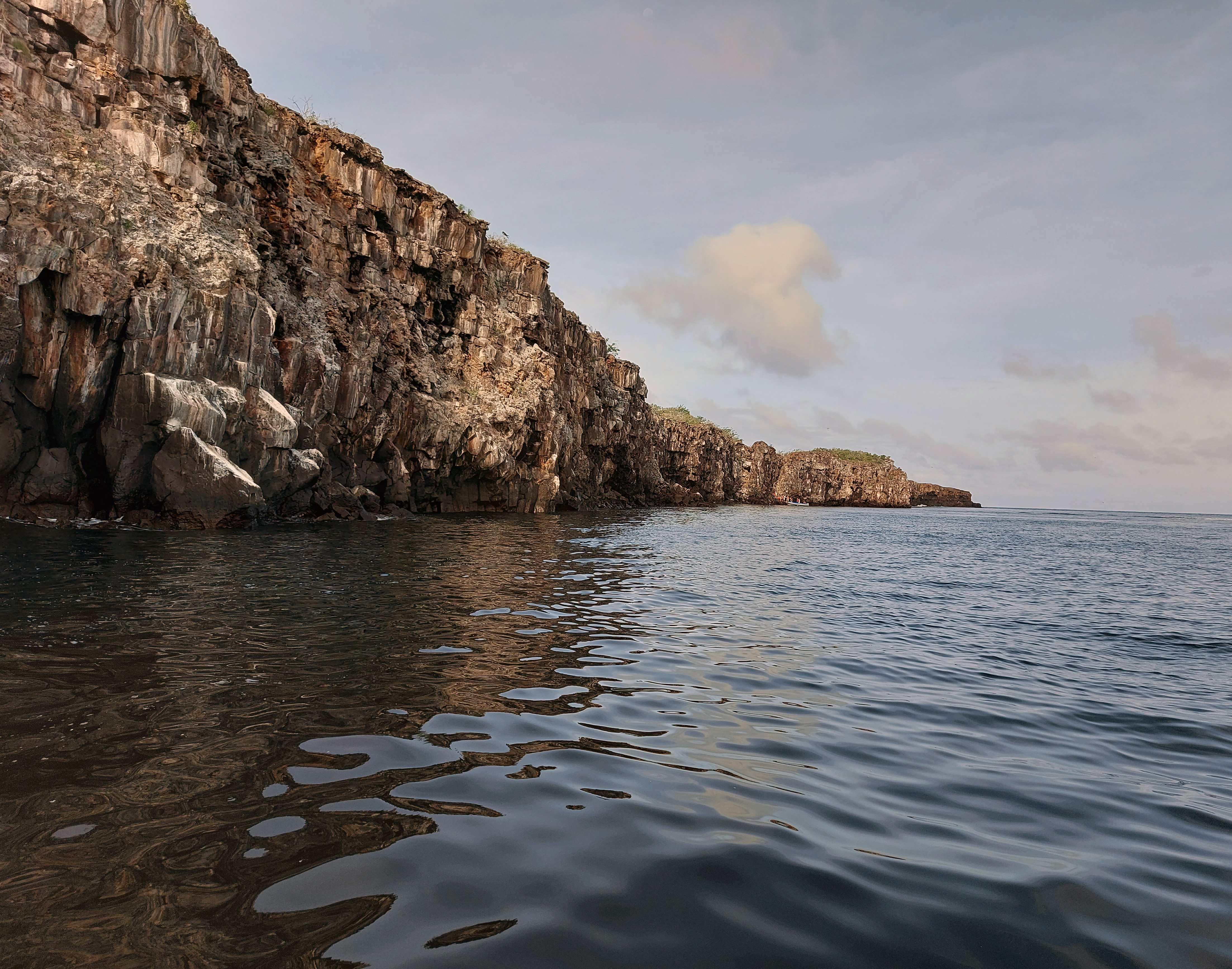
The Galápagos are not just a wildlife destination — they are a geological masterpiece. The archipelago sits atop a volcanic hotspot and continues to evolve, with some of its islands among the most geologically active on Earth. Sailing between islands feels like stepping into a new ecosystem every day, each shaped by its own wildlife and dramatic landscapes. Isabela, the largest island, feels rugged and remote with six shield volcanoes, rippling lava fields, and snorkeling spots shared with penguins.
Hiking across hardened lava fields, peering into volcanic craters, and watching the landscape shift from arid desert to misty cloud forest across a single island makes the Galápagos a destination that engages every sense.

7. It’s a Global Model for Conservation
The Galápagos were declared a UNESCO World Heritage Site in 1978 and have been at the forefront of sustainable tourism ever since. Visitor numbers are tightly controlled, access to many areas requires certified naturalist guides, and the entrance fee — currently $100 for foreign adults — goes directly toward conservation. Unique travel experiences are becoming more popular every year. At the Galápagos Islands, this includes seeing Giant Tortoise conservation in action — and knowing that your visit directly contributes to protecting one of the planet’s most irreplaceable ecosystems.
When you visit the Galápagos, you’re not just a tourist — you’re a contributor to one of the most successful conservation projects in history.

8. Birdwatching in the Galápagos Is World-Class
For birdwatchers, the Galápagos is as close to paradise as it gets. Watch frigatebirds’ showy, chest-puffing mating rituals. Pass blue-footed, red-footed and masked boobies on a guided walk with a conservation expert.
Española Island is home to the largest colony of waved albatross in the world. Genovesa Island hosts enormous colonies of red-footed boobies nesting directly beside the walking trails.
With around 140 bird species recorded in the archipelago — including 36 endemic species — the Galápagos offers some of the most accessible and rewarding birdwatching in South America.
9. The Adventure Activities Are Exceptional
Beyond wildlife watching, the Galápagos offer a genuinely impressive range of active experiences. Active adventures on land and sea add depth to the trip — from kayaking the turquoise waters of Tortuga Bay and hiking the rim of Sierra Negra volcano on Isabela (one of the largest volcanic craters in the world) to surfing the breaks of San Cristóbal and mountain biking through the Santa Cruz highlands.
The combination of wildlife, geology, and adventure makes the Galápagos one of the most compelling active travel destinations in the world, for every age and fitness level.
10. It’s a Genuine Once-in-a-Lifetime Experience
The Galápagos Islands will continue to be one of South America’s safest tourist destinations, and global bucket list destinations continue to rise — with Galápagos cruise bookings up 16% on the previous year. There is a reason demand keeps growing: it is one of those rare destinations where the reality exceeds the expectation. You arrive expecting to be impressed. You leave having had an experience that quietly rearranges your sense of what travel can be.

Frequently Asked Questions About Visiting the Galápagos
Is a Galápagos cruise worth it?
Absolutely. A cruise is the best way to visit multiple islands, wake up near new wildlife sites each morning, and maximize your time in protected areas. Small-ship cruises remain the classic way to experience the Galápagos, allowing guests to wake up near new islands each day and maximize time at visitor sites.
When is the best time to visit the Galápagos Islands? The Galápagos is a year-round destination. The islands enjoy almost perfect weather all year with two distinct seasons. Temperatures rarely dip below 70°F or reach higher than 90°F.
June–November brings cooler, drier weather and excellent snorkeling visibility. December–May is warmer, greener, and ideal for seeing baby animals and nesting birds.
How far in advance should I book?
The islands have strict visitor caps, so spaces tend to fill up fast, particularly in peak season. Looking at booking patterns, you’ll want to lock in your spot about 4.5 months ahead.
Ready to Plan Your Galápagos Trip?
The Galápagos Islands are not just a destination — they are a journey into the heart of nature’s creativity. Whether you’re drawn by the wildlife, the volcanic landscapes, the snorkeling, or the sheer otherworldliness of it all, visiting the Galápagos is a transformative experience that stays with you forever.


