
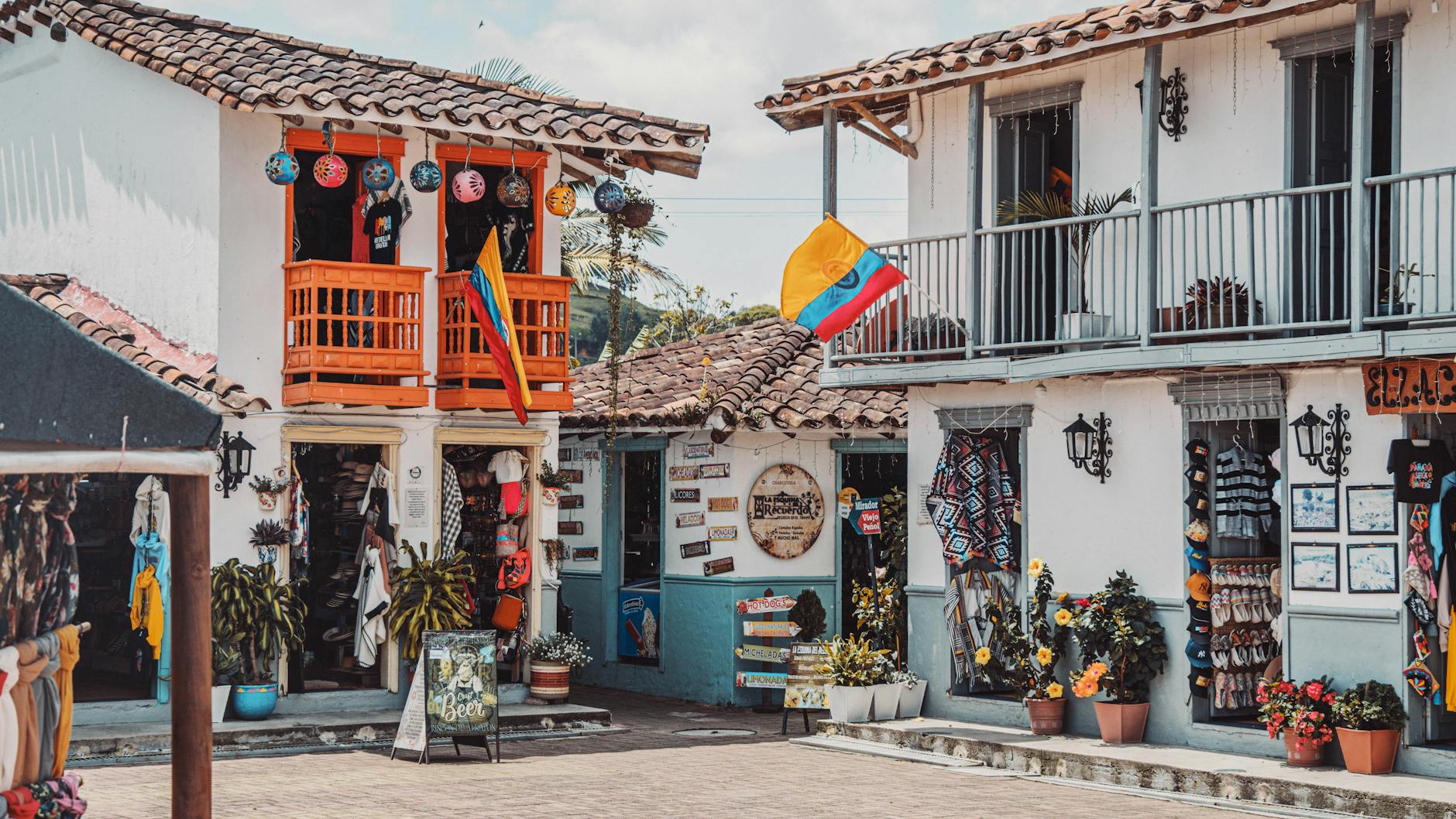
The perfect two-week snapshot of South America’s most surprising country — cities, coffee, and Caribbean beaches in one unforgettable trip.
Colombia has one of the most dramatic travel glow-ups in modern history. A country once synonymous with danger is now one of South America’s most visited destinations — and for good reason. Extraordinary cities, colonial towns, cloud forests, Caribbean beaches, and a coffee region of staggering beauty all packed into one country. This Colombia 10-day itinerary takes you through the heart of it: the electric capital Bogotá, the reinvented city of Medellín, and the sun-soaked Caribbean coast.
Whether you’re flying into Bogotá or Cartagena, this guide gives you a day-by-day plan, neighbourhood recommendations, transport between cities, budget breakdowns, and the insider details that turn a good Colombia trip into an exceptional one.

Colombia Quick Facts 2026
📍 Capital: Bogotá (also your starting point)
🌡️ Climate: Varies dramatically by region — from cool Andean highlands to tropical coast
💵 Currency: Colombian Peso (COP) — roughly 4,000 COP per 1 USD
✈️ Main airports: El Dorado Bogotá (BOG), José María Córdova Medellín (MDE), Rafael Núñez Cartagena (CTG)
🗣️ Language: Spanish
⏱️ This itinerary: 10 days — Bogotá (3) · Medellín (3) · Caribbean Coast (4)
🛂 Visa: Visa-free for most nationalities up to 90 days
Why This Colombia 10-Day Itinerary Works
Most first-time visitors to Colombia face the same problem: the country is enormous and the highlights are spread across very different landscapes and climates. This itinerary solves that by moving logically from south to north — from the cool Andean capital through the valley city of Medellín and ending on the warm Caribbean coast — following a route that minimises backtracking and maximises contrast.
Bogotá gives you Colombia’s cultural and intellectual pulse. Medellín shows you one of the world’s great urban transformation stories. The Caribbean coast — whether you choose Cartagena, Santa Marta, or both — delivers colonial grandeur, white sand beaches, and the relaxed Caribbean pace that rounds off the trip perfectly.
You can do this itinerary on a budget, mid-range, or in comfort. Costs at each level are included throughout.
Colombia 10-Day Itinerary Overview
| Day | Location | Highlights |
|---|---|---|
| 1 | Bogotá | La Candelaria, Gold Museum, Monserrate |
| 2 | Bogotá | Usaquén, street food tour, Zona Rosa |
| 3 | Bogotá | Day trip to Zipaquirá Salt Cathedral |
| 4 | Medellín | Arrival, El Poblado, cable car |
| 5 | Medellín | Comuna 13, city transformation tour |
| 6 | Medellín | Day trip to Guatapé & El Peñol |
| 7 | Caribbean Coast | Arrival Cartagena, Walled City |
| 8 | Caribbean Coast | Rosario Islands, Getsemaní |
| 9 | Santa Marta / Tayrona | Travel, Tayrona National Park |
| 10 | Santa Marta | Minca, departure |
Days 1–3: Bogotá, Colombia
Elevation: 2,600 m · Climate: Cool, 14°C average · Best neighbourhood to stay: La Candelaria or Chapinero
Bogotá is a city that takes some getting used to — sprawling, loud, chaotic, and utterly alive. At 2,600 metres above sea level it’s one of the highest capital cities in the world, which means cool weather year-round and a day or two of acclimatisation. Give it time and it rewards you generously.
Day 1 — La Candelaria & the Historic Centre
Start your Colombia trip where the country started: La Candelaria, Bogotá’s colonial old town. The neighbourhood’s narrow streets are lined with colourful buildings, street art, universities, and some of the country’s most important museums.
Museo del Oro (Gold Museum) is the essential first stop — arguably the finest pre-Columbian gold collection in the world, with over 55,000 pieces. Allow two hours minimum. Entry is around 4,000 COP on weekdays, free on Sundays.
Walk south to Plaza de Bolívar, the historic main square flanked by the Capitol building, the Cathedral, and the Palace of Justice — each representing a different chapter of Colombian history.
In the afternoon, take the Teleférico to Monserrate — a hilltop sanctuary at 3,152 metres with the most spectacular view over Bogotá’s endless urban sprawl. Go for sunset and watch the city light up below you.
Dinner: Head to La Puerta Falsa, a legendary spot near Plaza de Bolívar serving traditional Bogotano cuisine — the ajiaco (chicken and potato soup) is the definitive Bogotá dish.
Day 2 — Usaquén, Food & the Modern City
Take a taxi or TransMilenio north to Usaquén — a former colonial village absorbed into the city that has reinvented itself as Bogotá’s most charming neighbourhood. Browse the Sunday flea market (if visiting on a Sunday), or explore the boutique restaurants, antique shops, and quiet plazas any day of the week.
Spend the afternoon exploring Chapinero, Bogotá’s progressive, artsy neighbourhood packed with independent coffee shops, bookstores, and excellent restaurants. This is the best area in the city for craft coffee — Colombian beans brewed by people who genuinely care.
In the evening, join a street food tour of La Candelaria or venture to the Zona Rosa for dinner and nightlife. Bogotá’s restaurant scene has exploded — Colombian cuisine reimagined through a modern lens is exceptional here.
Day 3 — Day Trip to the Zipaquirá Salt Cathedral
One of Colombia’s most remarkable attractions sits just 49 km north of Bogotá: the Zipaquirá Salt Cathedral, an extraordinary underground cathedral carved entirely within a working salt mine. Fourteen chapels descend into the earth before opening into a soaring main nave illuminated in blue and violet light. It sounds kitsch — it is anything but.
Take a bus from Bogotá’s Portal del Norte terminal (about 1.5 hours, very cheap) or join an organised day tour. Combine with a walk around the colonial town of Zipaquirá above ground.
Days 4–6: Medellín, Colombia
Elevation: 1,495 m · Climate: Eternal spring, 22°C average · Best neighbourhood to stay: El Poblado or Laureles
The flight from Bogotá to Medellín takes 45 minutes — one of the best value short-haul flights in South America. You land in a city that was, just three decades ago, the most dangerous city on Earth. What Medellín has done since is one of the most remarkable urban transformation stories of the 21st century — and it’s worth understanding before you arrive.
Day 4 — Arrival & El Poblado
Land at José María Córdova Airport (45 minutes from the city centre — budget for this transfer, around $25 by taxi). Check into El Poblado, Medellín’s upscale neighbourhood and the most popular base for travellers. El Poblado has excellent restaurants, lively nightlife, and easy access to the rest of the city via Metro.
Spend your first afternoon walking Parque Lleras and the surrounding streets — this is where Medellín’s restaurant and bar scene concentrates. Take the Metro to Acevedo station and then the Metrocable (gondola) up to Santo Domingo and Parque Arví, a vast nature reserve above the city. The cable car ride is spectacular — you pass directly over the hillside comunas, and the contrast between the urban density below and the green hills above is breathtaking.
Dinner in El Poblado: Try Mondongos for traditional bandeja paisa — the definitive Antioquian meal: beans, rice, ground beef, chicharrón, egg, plantain, arepa, and avocado on a single enormous plate.
Day 5 — Comuna 13 & the Transformation Story
Comuna 13 is the most powerful thing you’ll see in Medellín. Once the most violent neighbourhood in the most violent city on Earth, it has transformed through a combination of urban intervention, community art, and infrastructure investment into a neighbourhood of extraordinary colour, energy, and resilience.
Take the outdoor escalators — the first public outdoor escalators in Latin America, installed to connect the steep hillside community to the Metro — up through layers of street art that tell the story of the comunas. Join a free walking tour led by local guides who grew up here: their perspective is irreplaceable.
Spend the afternoon at the Museo de Antioquia in the city centre, home to the world’s largest collection of Fernando Botero’s work. The Plaza Botero outside is free — 23 of his famously rotund bronze sculptures arranged around the square, equally loved and ridiculed by locals.
Evening: Head to Laureles neighbourhood for a more local evening — less touristy than El Poblado, excellent restaurants, and the city’s best craft beer scene at spots along Avenida El Poblado.

Day 6 — Day Trip to Guatapé & El Peñol
The best day trip from Medellín and one of the most photogenic places in Colombia. Guatapé is a small colonial town 79 km east of Medellín, famous for its extraordinarily colourful buildings — every house is decorated with bright zócalos (painted friezes) depicting scenes from local life.
El Peñol — a 200-metre-high granite monolith rising from a reservoir — dominates the landscape. Climbing the 740 steps to the top gives you one of the most extraordinary panoramic views in all of Colombia: a mosaic of reservoir, islands, and rolling hills stretching to the horizon.
Buses depart from Medellín’s Norte terminal every 30 minutes from 6:30 AM. The trip takes about 2 hours each way.
Days 7–10: The Caribbean Coast
Climate: Hot and tropical, 28–33°C · Choose: Cartagena only / Cartagena + Santa Marta / Cartagena + Tayrona
Fly from Medellín to Cartagena (about 1 hour). The moment you step off the plane the temperature hits you — you’ve dropped from Medellín’s eternal spring to the full Caribbean tropics. Everything slows down. It should.
Day 7 — Cartagena: The Walled City
Cartagena de Indias is one of the most beautiful cities in the Americas. Its UNESCO-listed walled city (Ciudad Amurallada) is an extraordinary preserved colonial centre of cobblestone streets, bougainvillea-draped balconies, Baroque churches, and plazas that feel unchanged from the 16th century. It is also extremely touristy — embrace it or escape to Getsemaní (see Day 8).
Spend the morning walking the old city walls — the most complete colonial fortifications in the Americas, stretching 11 km around the historic centre. The walk takes 2–3 hours and offers views over the Caribbean and the city. Visit the Castillo San Felipe de Barajas — the enormous Spanish fortress that defended Cartagena from pirate attacks and British invasion.
In the afternoon, wander the streets of the walled city: Plaza Santo Domingo, the Cathedral of Santa Catalina, the Portal de los Dulces. Stop for a fresh fruit juice at any street cart. Watch the light go gold on the colonial facades.
Dinner: Eat at La Cevichería — Cartagena’s most celebrated restaurant — or venture to the slightly more affordable excellent spots along Calle Arsenal in Getsemaní.
Day 8 — Rosario Islands & Getsemaní
Take a morning boat to the Islas del Rosario — a coral archipelago 35 km off the Cartagena coast, with clear turquoise water, coral reefs, and white sand. Day trip boats depart from the Muelle de los Pegasos from 8 AM daily. Prices range from $25 (crowded party boat) to $80+ (private catamaran). Choose wisely — the budget boats can feel like a floating nightclub.
Return to Cartagena by 3–4 PM and spend the afternoon in Getsemaní — the most interesting neighbourhood in Cartagena. Once rough, now rapidly gentrifying but still retaining its afro-Caribbean character through extraordinary street art, local restaurants, and a community that hasn’t entirely surrendered to tourism. Walk Calle de la Sierpe for the best street art concentration and have dinner at one of the neighbourhood’s excellent, more affordable restaurants.
Day 9 — Travel to Tayrona National Park
Take an early morning bus or shuttle from Cartagena to Santa Marta (3.5–4 hours). Santa Marta is Colombia’s oldest surviving city, with a pleasant historic centre and the best base for exploring Tayrona National Park.
Arrive in Santa Marta, drop your bags, and take a taxi or local bus to the Tayrona National Park entrance at El Zaino (45 minutes from Santa Marta). Enter the park and hike 45–90 minutes through jungle to reach Cabo San Juan or Playa Cristal — two of the most beautiful beaches in Colombia, where jungle meets Caribbean sea in a collision of green and turquoise.
Swim, hike the headland trail, watch the local spider monkeys, and be back at the park entrance by 5 PM. Return to Santa Marta for dinner.

Day 10 — Minca & Departure
Your final day takes you to Minca — a tiny mountain village 45 minutes above Santa Marta in the Sierra Nevada foothills. At 600 metres the temperature drops pleasantly, coffee and cacao grow on the surrounding hillsides, and the bird watching is exceptional — over 300 species have been recorded here.
Visit a local coffee farm for a morning tour showing the entire process from cherry to cup, then hike to the Pozo Azul natural swimming holes for a refreshing dip. Return to Santa Marta in the early afternoon and take a taxi to the airport for your departure flight — or extend into a second week exploring the Ciénaga Grande, the Lost City (Ciudad Perdida), or more of the Caribbean coast.
How to Get Between Cities
Bogotá → Medellín ✈️ Flight: 45 min · Recommended 🚌 Bus: 8–10 hours · Not recommended for time-limited trips
Medellín → Cartagena ✈️ Flight: 1 hour · Only practical option
Cartagena → Santa Marta 🚌 Bus/shuttle: 3.5–4 hours · Easy and comfortable ✈️ Flight: 45 min · Worth it if time is tight
Colombia Food Guide: What to Eat on This Itinerary
Ajiaco (Bogotá) — The capital’s signature soup: three varieties of potato, chicken, corn, and guasca herb. Warming, comforting, deeply Colombian. Eaten for lunch on cool Bogotá days.
Bandeja Paisa (Medellín) — The Antioquian mega-plate: beans, white rice, ground beef, chicharrón, fried egg, plantain, arepa, and avocado. An entire day’s calories in one sitting — and worth every one.
Arepa de Choclo — Sweet corn arepa, eaten for breakfast across the country. In Medellín markets they’re served fresh off the griddle with butter and cheese.
Ceviche Cartagenero — The Caribbean coast’s ceviche is different from its Peruvian cousin: richer, sweeter, with coconut milk and tropical flavours. La Cevichería in Cartagena is the benchmark.
Patacones — Fried green plantain, flattened and fried twice, served with everything on the Caribbean coast. The perfect accompaniment to fresh fish.
Café Colombiano — Colombia produces some of the world’s finest coffee, yet historically exported the best and drank the worst. The specialty coffee revolution has changed that — excellent third-wave coffee is now easy to find in Bogotá, Medellín, and even Cartagena.
Aguardiente — Colombia’s national spirit, anise-flavoured cane alcohol. Cheap, potent, essential to any Colombian night out. Order it and you’ll immediately make friends.
Colombia Safety Tips for 2026
Colombia’s safety situation has improved dramatically over the past 15 years and continues to improve. The destinations in this itinerary — Bogotá, Medellín, Cartagena, Santa Marta — are all well-established tourist destinations with manageable risk levels. That said, standard precautions apply everywhere.
In Bogotá: La Candelaria can feel unsafe at night — take taxis after dark rather than walking. Avoid displaying expensive cameras, phones, or jewellery on the street. The TransMilenio (bus) is safe during the day but can be crowded and pickpocket-prone in peak hours.
In Medellín: El Poblado and Laureles are safe neighbourhoods. Avoid wandering into unfamiliar comunas without a local guide. The Metro system is safe and efficient.
In Cartagena: The walled city and Getsemaní are safe for walking day and evening. Be aware of scopolamine (burundanga) — a drug sometimes slipped into drinks. Never accept drinks from strangers and be cautious in unfamiliar bars.
Everywhere: Use Uber or InDriver rather than hailing taxis off the street. Keep a photocopy of your passport separate from the original. Don’t resist if someone attempts to rob you — compliance is always the right call.
The bottom line: Hundreds of thousands of travellers complete this exact itinerary every year without incident. Be aware, be sensible, and don’t let fear prevent you from experiencing one of the world’s great travel destinations.
Colombia 10-Day Itinerary: Frequently Asked Questions
Is 10 days enough for Colombia?
Ten days is enough to get a strong introduction to Colombia’s highlights — Bogotá, Medellín, and the Caribbean coast. It won’t cover everything (the Coffee Region, the Amazon, the Pacific coast, and the Llanos all deserve separate trips), but this itinerary gives you the best possible first Colombia experience in the time available.
What is the best time of year to visit Colombia?
Colombia’s varied geography means different regions have different seasons. For this specific itinerary: December to March and June to August are generally the driest and most pleasant periods in Bogotá and Medellín. The Caribbean coast is hot year-round — the driest months are December to April. Semana Santa (Easter week) brings festivals but also higher prices and crowds.
Is Colombia safe for solo travellers?
Yes — Colombia is one of the most popular solo travel destinations in South America. The backpacker infrastructure is excellent, hostels are social, and the Colombian people are famously warm and helpful. Solo female travellers should take standard precautions (share itineraries, use Uber, avoid walking alone late at night in unfamiliar areas) but should not be deterred from visiting.
Do I need to speak Spanish in Colombia?
Basic Spanish makes an enormous difference in Colombia, especially outside tourist areas. In hostels, tour companies, and Cartagena’s tourist zone, English is spoken. In local markets, on buses, and in smaller towns, Spanish is essential. Learning 20–30 key phrases before your trip will dramatically improve your experience.
Can I extend this itinerary?
Absolutely. The most popular extensions are: +3 days in the Coffee Region (Eje Cafetero) — add between Medellín and the coast, visiting Salento, the Valle de Cocora, and a working coffee farm. +3 days in Santa Marta — the Ciudad Perdida (Lost City) trek takes 4–6 days and is one of South America’s great hikes. +4 days on the Pacific Coast (Nuquí or Bahía Solano) — one of the most biodiverse and untouched coastlines in the world.
Colombia 10-Day Itinerary: Final Word
Colombia moves fast. One moment you’re in a 2,600-metre capital wrapped in mountain fog, watching the gold glint under museum lights; three days later you’re sweating through cobblestone streets in the full Caribbean heat, eating ceviche on a colonial balcony. The contrast is the point. This country contains multitudes — of landscapes, of climates, of history, of food — and ten days barely scratches the surface.
But what a surface to scratch. Bogotá will challenge you, Medellín will inspire you, and the coast will make you want to cancel your flight home. That’s Colombia. It gets under your skin faster than almost anywhere in the world, and it stays there longer.
Come ready to move, eat well, talk to strangers, and revise every assumption you arrived with. Colombia will handle the rest.


