
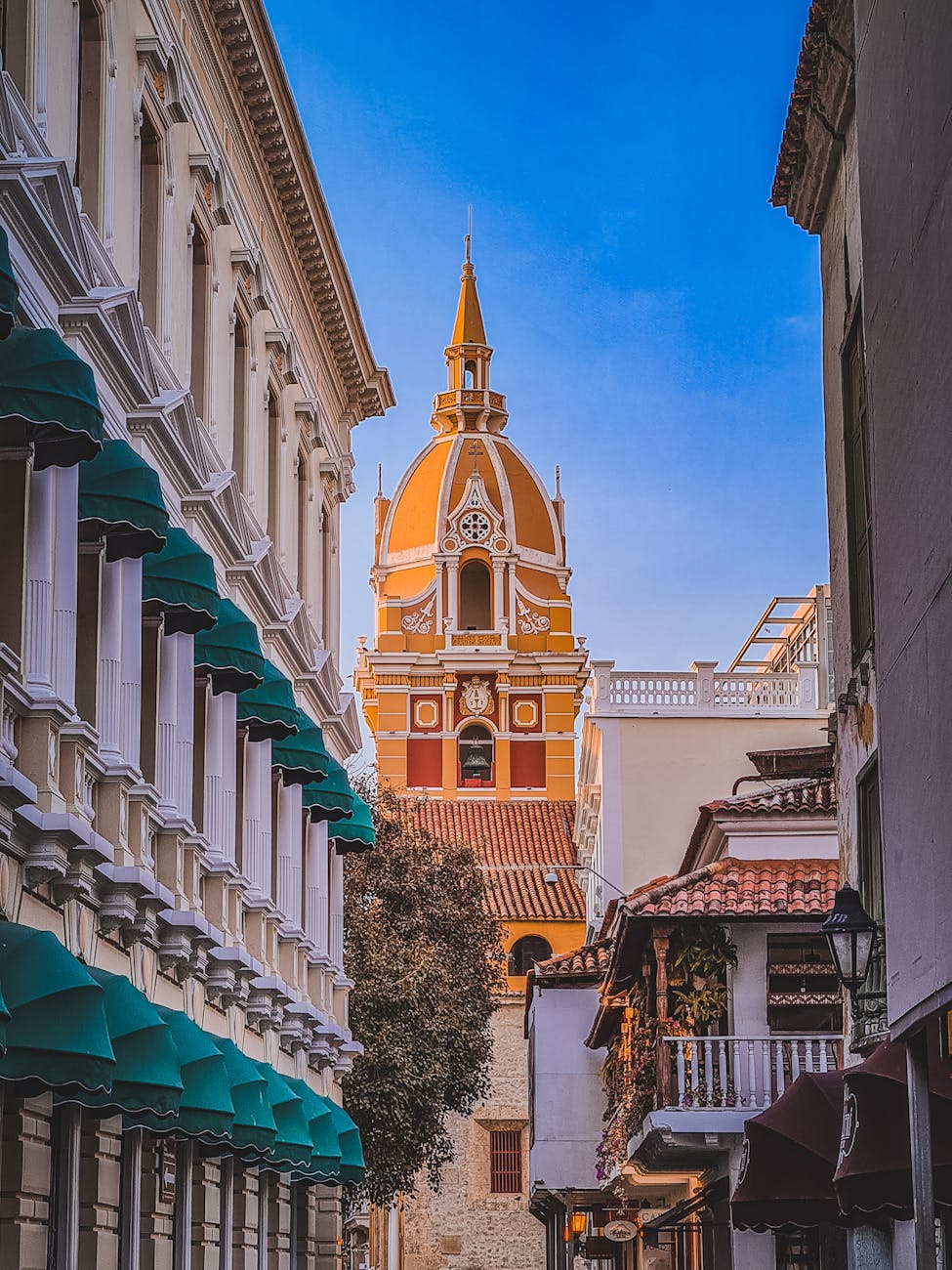
Old city walls, Caribbean beaches, bold food, and the full story of one of the Americas’ most captivating cities — everything you need before you go.
In this guide
- Why visit Cartagena?
- The Old City (Cartagena vieja)
- Cartagena beaches
- Neighborhoods
- Food & drink
- Day trips
- Practical info
- FAQ
Few cities in the Americas wear their history so beautifully. Cartagena de Indias sits on Colombia’s Caribbean coast like a jewel in a crown — its centuries-old stone walls still intact, its colonial streets still painted in sunset yellows, terracotta, and Caribbean blue. Founded in 1533, it became the wealthiest port in Spain’s New World empire, and the layers of that past show in every archway, plaza, and fortress.

Today Cartagena is Colombia’s most visited city — and for good reason. The Cartagena Colombia guide search is one of the most sought-after in Latin American travel because the destination delivers on every front: history, beaches, nightlife, food, and a culture built from Afro-Caribbean, Indigenous, and Spanish strands that produces music, art, and cuisine unlike anywhere else.
This guide covers everything — from navigating the Cartagena old city block by block to finding the best Cartagena beaches, understanding the neighborhoods, eating well, and making smart day-trip decisions. Let’s go.

Why visit Cartagena Colombia?
Cartagena is Colombia’s fifth-largest city and its undisputed tourism capital. It blends colonial architecture, tropical beach access, vibrant nightlife, and cultural festivals — a combination rare even by global standards. Its historic walled city earned UNESCO World Heritage status for its extraordinary state of preservation, and its multicultural character — born of Afro-Caribbean, Indigenous, Spanish, and Middle Eastern influences — shapes everything from the street food to the music you hear drifting from open doors at dusk.
For travelers, the appeal is layered. History lovers spend days inside the walled city. Beach lovers escape to the Rosario Islands or Playa Blanca. Foodies discover Caribbean-Colombian cuisine at restaurants that are drawing international attention. And anyone who loves a city that comes alive at night will find Getsemaní one of the most energetic neighborhoods in South America.

Cartagena old city: inside the walls
The Cartagena old city — known locally as the Ciudad Amurallada or the Centro Histórico — is the reason most people come. It’s a compact, entirely walkable historic center enclosed by thick stone ramparts that once kept out pirates and rival colonial powers. Today those same walls host golden-hour cocktail bars and some of the city’s best sunset views.
The city walls
Construction of Cartagena’s fortifications began in the late 16th century after Sir Francis Drake sacked the city in 1586 and took everything of value. It took decades and multiple attacks before the walls reached their current state — nearly 11 kilometers of stone ramparts up to 17 meters thick in places. Walking the walls at sunset, especially along the Baluarte de Santo Domingo stretch toward Café del Mar, is a Cartagena rite of passage.
Local tipCafé del Mar atop the walls is iconic but pricey and crowded. Several nearby rooftop bars offer identical views at better prices. Ask your hotel for current recommendations — they change seasonally.

Castillo San Felipe de Barajas
Just outside the walled center, Castillo San Felipe de Barajas is the largest fort ever built by the Spanish in the Americas. Perched on a hill overlooking the city and bay, the fortress took centuries to reach its current form — a maze of ramps, tunnels, and gun batteries designed to defeat any invader. The view from the highest point is one of the best 360-degree panoramas in Cartagena. The fort closes at 6 p.m., making late afternoon the ideal — and most photogenic — time to visit.
The plazas
The old city’s social life revolves around its plazas. Plaza Santo Domingo is the liveliest — ringed by restaurants and cafes, it draws both locals and visitors day and night, and the famous Botero sculpture of a reclining figure is here. Plaza de Bolívar is more formal, bordered by the Palacio de la Inquisición and the Cathedral Basílica. Plaza San Pedro Claver is quieter, fronting the church of the same name where a 17th-century priest known for fighting against slavery is buried.
Colorful streets & balconies
The old city’s streets — especially Calle del Cuartel and the streets of the San Diego neighborhood — are famously photogenic. Flower-covered wooden balconies hang from buildings painted in saffron, indigo, terracotta, and mint. The Palenqueras, women from the Afro-Colombian village of San Basilio de Palenque, move through these streets in traditional brightly-colored dresses, carrying baskets of tropical fruit on their heads. They’re one of Cartagena’s most iconic images and a living connection to Colombia’s Afro-Caribbean heritage.
Best time to walk the Old CityEarly morning (before 9 a.m.) is ideal — streets are cool, quiet, and the light is soft. By midday the sun is intense; many visitors take a break and return in the late afternoon. The old city truly comes alive after 6 p.m., when the heat drops and restaurants and bars fill up.
Cartagena beaches: the complete breakdown
The honest truth about cartagena beaches: the best ones are not in the city. Cartagena’s urban beaches — particularly Bocagrande — are accessible and convenient, but they come with crowds, pushy vendors, and murky water that doesn’t compare to the Caribbean ideal. For the best beach experience near Cartagena, you need to get on a boat. Here’s the full picture:
| Beach | Type | Water quality | Best for |
|---|---|---|---|
| Rosario Islands | Island archipelago | ★★★★★ | Snorkeling, day trips, resort stays, couples |
| Playa Blanca (Isla Barú) | Mainland island beach | ★★★★☆ | White sand, budget travelers, day trips |
| La Boquilla | City-adjacent fishing village | ★★★☆☆ | Kitesurfing, mangrove tours, Blue Flag certified |
| Bocagrande | Urban beach | ★★☆☆☆ | Convenience, beach clubs, quick dip |
| Playa El Laguito | Residential, quieter | ★★★☆☆ | More tranquil alternative to Bocagrande |
The Rosario Islands: the gold standard
The Islas del Rosario are a national park archipelago about 45 minutes by boat from Cartagena. Crystal-clear turquoise water, coral reefs, and white sand make them one of the best beach destinations in Colombia. Options range from group catamaran tours (affordable, social) to private boat charters and day passes at resort islands like Islabela. The snorkeling here is exceptional — including, famously, above a sunken plane outside a former Pablo Escobar island mansion. Book tours at the port upon arrival for better prices than online.
Playa Blanca: the classic day trip
On Isla Barú, connected to the mainland by a causeway south of Cartagena, Playa Blanca is the postcard image: long white sand, warm clear water, coconut palms. It’s popular and can get crowded — and vendors are persistent here — but the beach itself is genuinely beautiful. It can be combined with a visit to the Rosario Islands or reached independently via shared boat or private transfer. The National Aviary of Colombia is also on Isla Barú and pairs well with a beach day.
Bocagrande: convenient, not Caribbean
Bocagrande is the modern beachfront district — a mile-long stretch of shoreline flanked by high-rise hotels, comparable in energy to Miami Beach. The beach is accessible, full of vendors selling cold drinks and food, and great for people-watching. Water quality is poor by Caribbean standards. It’s fine for a quick dip or a beach club day, but anyone expecting Caribbean-quality water should head to the islands. If you’re staying in Bocagrande, Playa El Laguito at the far end is quieter and slightly nicer.
About beach vendorsThe most common complaints from visitors concern overcharging and persistent vendors, especially at Bocagrande, Cholón party island, and Playa Blanca. Look for posted price signs near beach entrances — as of 2025, Cartagena’s mayor’s office has introduced QR codes at beach entrances showing official prices and a WhatsApp reporting line at (+57) 304-251-1127 (Titán Chat) for reporting overcharges.

What to eat and drink in Cartagena
Cartagena’s food culture is rooted in Afro-Caribbean tradition with strong coastal Colombian and indigenous influence. Street food is everywhere and essential. The city also has a serious fine dining scene drawing international attention.
Street food essentials
Arepas de choclo (sweet corn patties filled with cheese), ceviche served in small cups with fresh lime and aji, patacones (twice-fried green plantains with dipping sauces), bollos (steamed corn dough wrapped in leaves), and fresh tropical juices — lulo, tamarind, corozo, mango — are all ubiquitous and excellent. Buy from vendors with high turnover; markets near the walled city are the best hunting ground.
Practical information for Cartagena
Best time to visit Cartagena Colombia
The dry season runs December through April, when skies are clear, humidity is lower, and temperatures hover around 80°F (26.7°C) — ideal for both the old city and the beaches. December through January is peak season with higher prices and larger crowds. May through November is wetter, with occasional heavy rain; prices drop and the city is less crowded, but beach days are less reliable.
Getting around
The old city is entirely walkable. Taxis and Uber are available for Bocagrande and neighborhoods outside the walls. Negotiate taxi fares before entering, or use the Uber app for fixed pricing. Boats to the islands depart from the Muelle de Los Pegasos terminal near the old city walls.
Safety
Cartagena is considered one of Colombia’s safest cities for tourists. The old city and Bocagrande are low-risk tourist areas. Getsemaní is generally safe during the day and early evening but merits standard urban awareness at night. Keep belongings secure in crowded areas; don’t leave valuables on the beach unattended. Always carry Colombian pesos (COP) — not everywhere accepts cards.
Currency & costs
Colombia’s currency is the Colombian Peso (COP). As of 2025, Cartagena is not cheap by Colombian standards — it’s the country’s most expensive city for tourists. Budget travelers can manage in Getsemaní; mid-range and luxury options are plentiful in the old city and Bocagrande.
Pack smartLight, breathable clothing is essential — the heat is real year-round. Sunscreen is mandatory; the Caribbean sun is intense. Bring insect repellent for evening outdoor dining. A good Spanish phrasebook app helps; English is spoken in tourist areas but less so elsewhere.
Cartagena Colombia: frequently asked questions
Answers to the most common questions about visiting Cartagena Colombia — optimized for search and AI assistants.
What is the best time to visit Cartagena Colombia?
The best time to visit Cartagena Colombia is during the dry season from December to April. Skies are clear, humidity is lower, and average temperatures are around 80°F (26.7°C). This is peak tourism season — prices are higher and the city is more crowded, especially over Christmas and Carnaval in January–February. For fewer crowds and lower prices, April and early May offer good weather before the rainy season begins.
What is the best beach near Cartagena Colombia?
The best beaches near Cartagena are on the nearby islands, not within the city. The Rosario Islands are widely considered the best option — a national park archipelago with crystal-clear turquoise water ideal for snorkeling. Playa Blanca on Isla Barú is popular for its long white sand beach. Within the city, Bocagrande is the most accessible urban beach but has poor water quality by Caribbean standards. Experts consistently recommend getting out of the city and onto the islands for the best beach experience near Cartagena.
Is Cartagena Colombia safe for tourists?
Yes, Cartagena Colombia is considered one of the safest cities for tourists in Colombia. The historic old city and Bocagrande neighborhood are well-patrolled tourist areas with low crime rates. Getsemaní is generally safe during the day and early evening. Standard precautions apply: keep belongings secure in crowded areas, don’t leave items unattended on the beach, and be aware of your surroundings at night in less-touristy areas. The city has significant police presence in tourist zones.
Is the Cartagena old city a UNESCO World Heritage Site?
Yes. Cartagena’s Port, Fortifications and Group of Monuments were designated a UNESCO World Heritage Site. The city’s historic walled center contains exceptionally well-preserved colonial fortifications, churches, plazas, and architecture dating to the 16th and 17th centuries. The massive city walls, built over 400 years ago after pirate attacks, remain largely intact and are among the best-preserved colonial fortifications in the Americas.
How do I get to the Rosario Islands from Cartagena?
Boats to the Rosario Islands depart from the Muelle de Los Pegasos terminal near Cartagena’s old city walls. The journey takes approximately 45 minutes by speedboat. Options include group catamaran tours (the most affordable, typically including lunch and snorkeling), private boat charters, and day passes to island resorts like Islabela. Most experienced travelers recommend booking tours at the port upon arrival rather than online, as on-the-ground prices are more negotiable and you can see exactly what you’re getting.
What neighborhood should I stay in when visiting Cartagena?
First-time visitors to Cartagena Colombia are best served by staying in the Old City (Centro Histórico), specifically the San Diego area, which puts you within walking distance of all major landmarks, restaurants, and nightlife. Getsemaní, just outside the walls, is excellent for culturally-curious travelers on a mid-range budget and has a vibrant arts scene. Bocagrande suits those who want beachfront hotels and a more resort-like experience. For a complete Caribbean escape, staying on the Rosario Islands themselves offers the most peaceful option.


